LTL Pallet Shipping Problem Solved: Preparing a Wacker Neuson Compactor for Transport
A freight shipment can stall over a detail that is easy to overlook: how the equipment will be loaded.
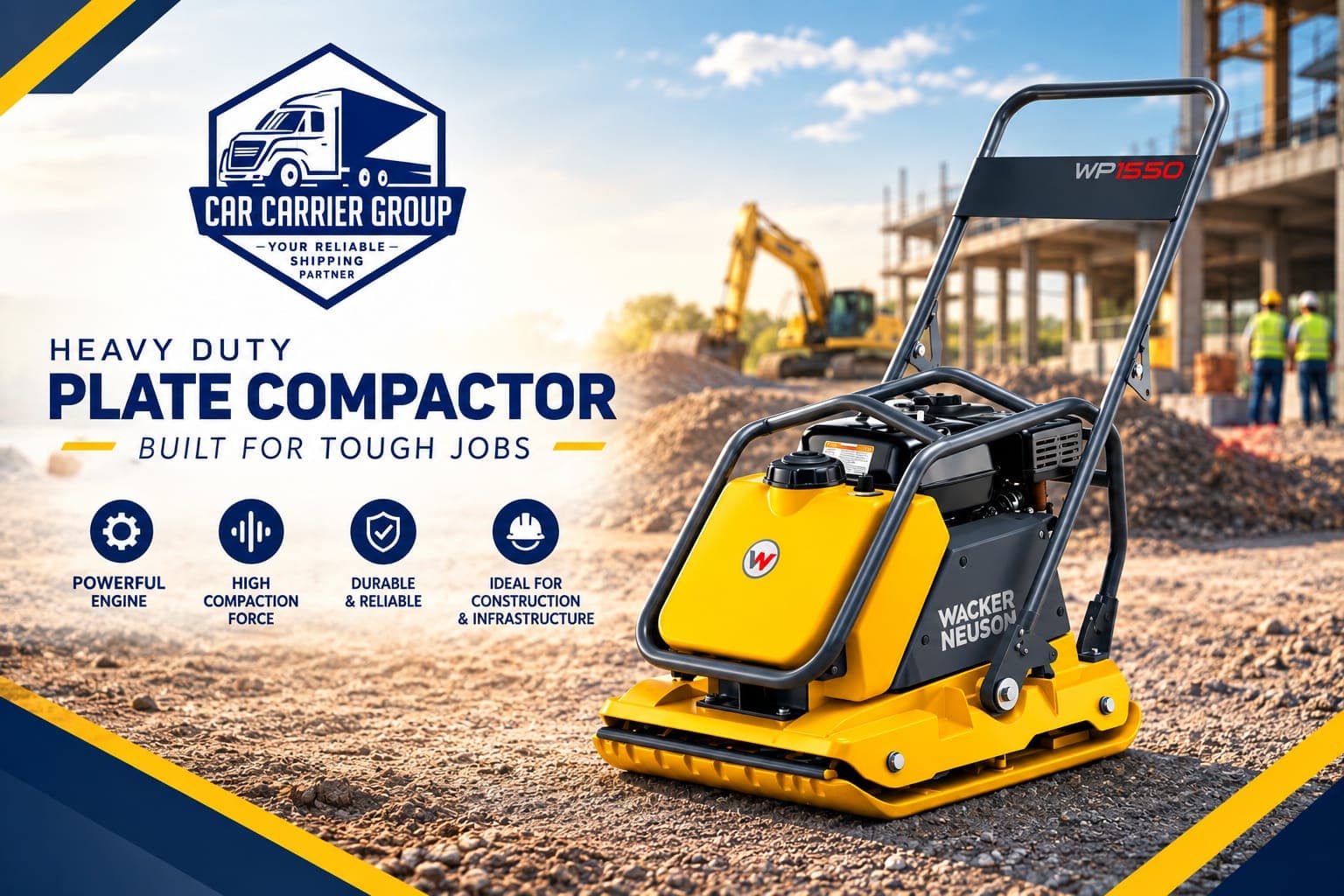
That was the challenge facing Germain, who needed to ship a Wacker Neuson vibratory compactor from Saltillo, Mississippi, to Brentwood, New York. The machine was not on a pallet, and carriers were refusing to load it.
Car Carrier Group helped resolve the preparation issue and coordinate the next step. Our team worked with the pickup location to have the compactor placed on a pallet, then arranged for a different carrier to collect it.
With the pallet issue addressed, the shipment is awaiting pickup.
For businesses and individual buyers shipping machinery, parts, or commercial products, Germain’s experience highlights an important lesson: successful freight transportation starts before the truck arrives.
A Small Preparation Detail Can Stop a Freight Shipment
A machine may be ready for sale or use without being ready for freight transportation.
In Germain’s case, the immediate obstacle was the lack of a pallet. The carriers contacted were unwilling to load the compactor in its existing condition.
Car Carrier Group coordinated with the pickup location to address that problem rather than simply leaving the customer to resolve it alone. Once the machine was palletized, our team arranged another carrier for the pickup.
The shipment has not yet been collected or delivered, but the preparation issue that prevented pickup has been addressed.
That distinction matters. Freight coordination involves identifying what is needed, confirming who will handle it, and keeping the customer informed about the shipment’s actual status.
Car Carrier Group Ships More Than Cars
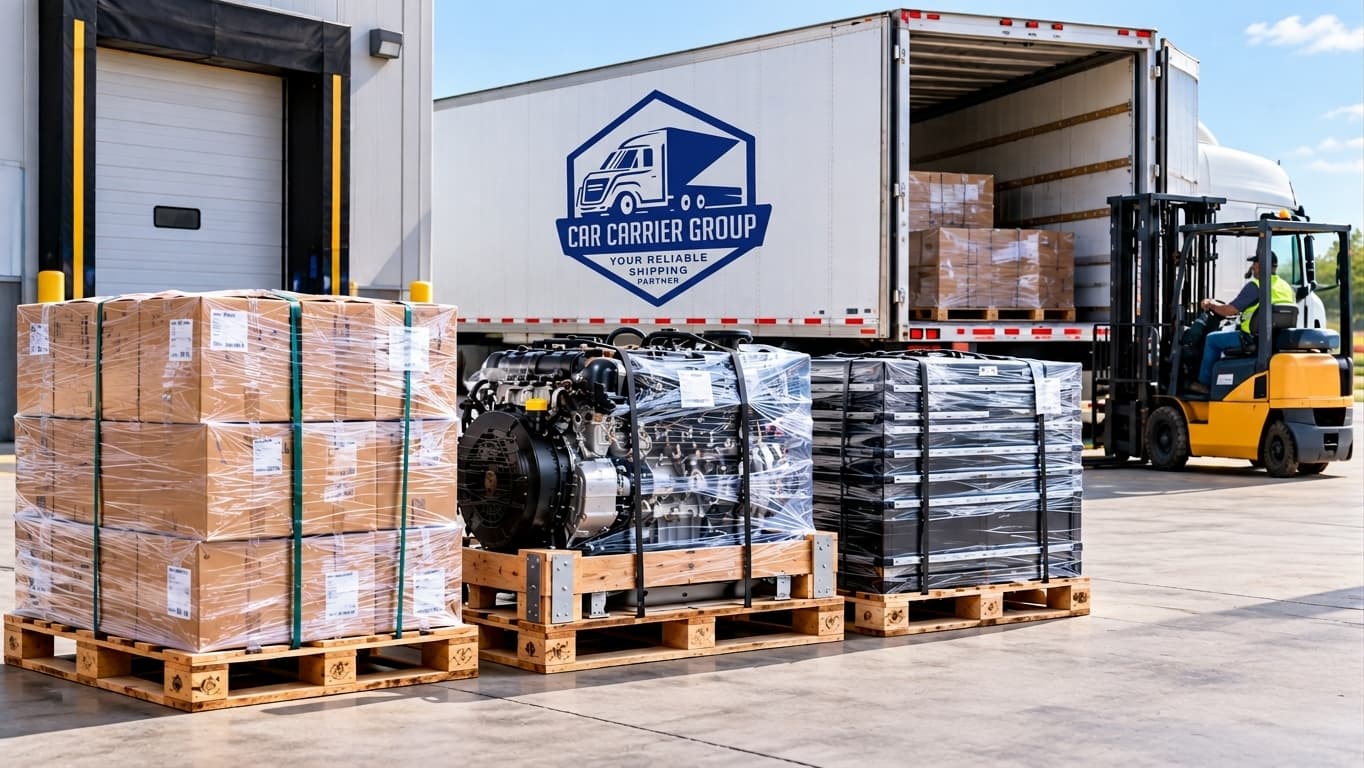
Our name may start with cars, but Car Carrier Group also coordinates nationwide LTL freight, pallet shipping, partial truckload, and full truckload transportation.
Businesses do not always need an entire trailer. A single pallet of parts, a crated machine, or several pallets of inventory may call for a different transportation solution than a warehouse-sized order.
Our team helps customers discuss options for shipments such as:
Palletized commercial products and inventory.
Machinery and equipment components.
Automotive parts, engines, and transmissions.
Tires and wheel assemblies.
Tools and shop equipment.
Crated items and replacement parts.
Auction purchases and business-to-business freight.
Acceptance and handling requirements depend on the commodity, packaging, dimensions, weight, route, and selected carrier. Tell us exactly what you need to move so we can evaluate suitable options.
What Is LTL Pallet Shipping?
LTL stands for less-than-truckload. It allows freight from multiple customers to share trailer capacity rather than requiring each customer to book an entire truck.
For a business shipping one pallet or several handling units, LTL can be an option worth comparing with larger-capacity services.
Common reasons to request an LTL freight quote include:
Sending inventory to a customer or distributor.
Moving replacement parts to a repair facility.
Shipping equipment purchased from an auction or private seller.
Transferring products between business locations.
Replenishing stock without waiting to fill a trailer.
LTL freight may be handled at terminals and transferred between trucks. Packaging should account for that handling environment—not just the distance between origin and destination.
LTL, Partial Truckload, or FTL: Which Fits Your Shipment?
Choosing a freight service involves more than counting pallets. Weight, dimensions, handling needs, available equipment, and delivery requirements all matter.
Service | How it works | When to discuss it |
|---|---|---|
LTL freight | Your shipment shares trailer capacity with freight from other customers, often through a terminal network. | One or several properly prepared handling units that do not require an entire truck. |
Partial truckload | Your freight occupies part of a trailer under arrangements that vary by provider and route. | Larger shipments or freight whose space and handling needs merit comparison with LTL and dedicated service. |
FTL freight | A truck is dedicated to your shipment, even if you do not fill every available space. | Large orders, substantial space requirements, or shipments that benefit from dedicated transportation. |
A relatively light shipment can still require considerable trailer space. Likewise, fewer pallets do not automatically mean LTL is the best choice.
Send Car Carrier Group the full shipment details so we can discuss the available options.
Full Truckload Shipping for Larger Freight Moves
FTL, or full truckload shipping, is worth considering when your shipment requires a dedicated truck.
Manufacturers, distributors, equipment businesses, and other commercial shippers may request truckload transportation for large inventory transfers, substantial orders, or freight with specific handling requirements.
Dedicated transportation can reduce the terminal transfers associated with a typical LTL network. However, routing, equipment, loading arrangements, and service commitments must be confirmed for the individual shipment.
When requesting an FTL freight quote, provide:
A complete commodity description.
Total weight and dimensions.
Pallet or piece count.
Whether the freight can be stacked.
Required trailer or equipment type, if known.
Loading and unloading capabilities.
Facility hours and appointment requirements.
Ready date and delivery needs.
Do not assume that selecting FTL includes loading assistance, a liftgate, or a guaranteed delivery appointment. Discuss those requirements before booking.
Why Proper Pallet Preparation Matters
A pallet provides a handling base, but placing equipment on a pallet is only part of preparing it for transportation.
The pallet must be suitable for the load, and the freight must be secured appropriately. Equipment that can roll, tip, or shift may require blocking, bracing, straps, or a purpose-built crate.
Before pickup, confirm:
Pallet condition: The base is sound and suitable for the equipment’s weight.
Fit: The load is properly supported, with any overhang disclosed.
Securement: The item cannot move freely on the pallet.
Protection: Delicate surfaces and exposed components are protected.
Handling access: The base can be handled with the equipment available.
Carrier requirements: The packaging is acceptable for the selected service.
Shrink wrap alone may not secure a heavy machine adequately. Ask about preparation requirements before the pickup is scheduled.
What Affects LTL Freight Shipping Rates?
An accurate freight quote starts with an accurate description of the shipment.
Important pricing factors can include:
Pickup and delivery ZIP codes.
Commodity and applicable freight classification.
Packaged length, width, height, and weight.
Number of pallets or handling units.
Stackability and trailer space requirements.
Residential or limited-access locations.
Liftgate or other additional services.
Delivery appointments and time-sensitive requirements.
Measure the shipment after packaging, including the pallet and any protruding components. Include the pallet, crate, and packaging in the total weight.
Changes between the quoted details and the freight actually tendered can lead to revised charges.
Loading Docks, Forklifts, and Liftgate Service
A truck arriving at the right address is only part of the plan. The freight must also be transferred safely between the ground, facility, and trailer.
Before booking, confirm what is available at both pickup and delivery:
A loading dock.
A forklift with suitable capacity.
A liftgate, if required and available.
An accessible, level unloading area.
Staff authorized and equipped to handle the shipment.
A liftgate raises or lowers freight between the trailer and ground. It does not automatically include inside delivery, unpacking, installation, or moving equipment across gravel or uneven terrain.
Each handling unit must also fit within the liftgate’s size and capacity limits. Oversized or unusually heavy machinery may require a different arrangement.
Freight Shipping for Businesses That Ship Regularly
If your business sends freight every week, collecting consistent shipment information can make quoting and coordination more efficient.
Car Carrier Group can discuss transportation needs with manufacturers, wholesalers, distributors, repair facilities, equipment sellers, and other commercial shippers.
Whether you have one pallet ready today or a recurring flow of outbound orders, start with the details:
What is moving, how is it packaged, where is it going, and how will it be loaded and unloaded?
That information helps identify preparation issues early—the same kind of issue that initially held up Germain’s compactor.
Frequently Asked Questions About LTL, Pallet, and FTL Shipping
1. Can I ship just one pallet?
Yes. A single pallet may be suitable for LTL transportation, depending on the commodity, packaging, dimensions, weight, and route.
Provide those details when requesting a quote.
2. Does all LTL freight have to be on a pallet?
No. Some carriers accept appropriately prepared crates, drums, bundles, or other handling units. Requirements vary.
In Germain’s case, the carriers contacted would not load the compactor without a pallet. Confirm acceptance requirements for your specific freight before pickup.
3. Can Car Carrier Group help if my equipment is not palletized?
Tell us before booking. We can discuss the shipment’s requirements and whether preparation assistance can be coordinated at the pickup location.
Palletizing, crating, or other preparation is not automatically included in transportation charges.
4. Can you ship a Wacker Neuson compactor or similar equipment?
Our team can evaluate transportation options for compactors and other equipment.
Provide the exact model, dimensions, weight, operating condition, packaging, and available loading equipment. Photos can also help clarify the request.
5. What is the difference between LTL and FTL?
LTL shares trailer capacity among multiple customers. FTL dedicates a truck to your shipment.
The appropriate choice depends on space, weight, handling, scheduling, and cost—not simply whether your shipment fills a trailer.
6. When should I compare partial truckload with LTL?
Ask about partial truckload when your shipment occupies substantial space or has handling requirements that warrant comparison with standard LTL service.
There is no single pallet count that determines the best option for every shipment.
7. What information do I need for a pallet shipping quote?
Provide the commodity, pallet count, packaged dimensions and weight for each handling unit, pickup and delivery ZIP codes, ready date, and loading capabilities.
Also disclose residential addresses, appointments, restricted access, and special handling needs.
8. What is freight class?
Freight class is part of the classification system used for many LTL shipments. The applicable classification can depend on the commodity and transportation characteristics, including density, handling, stowability, and liability.
Do not guess a class based only on weight. Provide a precise product description and packaged measurements so the applicable classification can be checked.
9. Should I include the pallet in the dimensions and weight?
Yes. Quote the shipment as it will be presented to the carrier, including the pallet, crate, packaging, and any overhang.
For multiple handling units, provide measurements and weights for each one.
10. Why might the final freight charge differ from the quote?
Differences can arise if the actual weight, dimensions, classification, location type, or services differ from the quoted information.
Reweighs, remeasurements, additional handling, unsuccessful pickup attempts, or services requested later may affect charges under the applicable terms.
11. Do I need a liftgate?
You may need one if there is no suitable dock or forklift and the freight fits the available liftgate.
Tell us about both locations before booking. Liftgate availability and capacity must be confirmed for the shipment.
12. Can you arrange residential freight pickup or delivery?
Our team can evaluate residential service options. Disclose the address type, truck access, unloading area, and equipment available.
Residential service and liftgate service are separate requirements; one does not automatically include the other.
13. What is limited-access delivery?
Certain locations may have access restrictions or service requirements that a carrier treats as limited access.
Examples can include construction sites, schools, farms, storage facilities, or other sites identified in the carrier’s rules. Describe the actual location so requirements and charges can be checked.
14. Can machinery be shipped with fuel, oil, or batteries?
Requirements depend on the machine, contents, carrier, service, and applicable transportation rules.
Disclose fuel, fluids, batteries, and other potentially regulated materials before booking. Follow the preparation instructions confirmed for the shipment.
15. Can I request delivery by a specific date?
Yes, but distinguish between an estimated transit time, a delivery appointment, and a guaranteed service commitment.
Explain your deadline before booking and ask what options are available. Standard freight estimates should not be treated as a guarantee.
16. Is my freight insured?
Ask about the selected carrier’s liability terms and any separate cargo insurance options available for your shipment.
Carrier liability and cargo insurance are not interchangeable. Applicable limits, exclusions, deductibles, packaging requirements, and claims procedures should be reviewed before pickup. Do not assume the full invoice or replacement value is covered.
17. What is a freight bill of lading?
The bill of lading, often called the BOL, documents key shipment information and forms part of the transportation contract.
Check the shipper and recipient information, commodity description, handling-unit count, weight, and requested services. Make sure the pickup location uses the correct shipment paperwork.
18. What should I do when freight arrives?
Inspect the shipment before signing the delivery receipt. Record visible damage or shortages specifically, take photographs, and retain the packaging.
If damage is discovered after delivery, report it promptly and follow the applicable claim requirements and deadlines. Noting damage alone does not complete a claim.
19. Can you help with recurring LTL or truckload shipments?
Yes. Contact Car Carrier Group to discuss your usual commodities, shipment sizes, lanes, frequency, and service requirements.
Consistent information helps our team evaluate transportation options for your ongoing freight needs.
20. Has Germain’s compactor been delivered?
Not yet. At the time of this story, the pallet issue has been resolved, another carrier has been arranged, and the shipment is awaiting pickup.
Get an LTL Pallet Shipping or Full Truckload Quote
Germain’s shipment shows why preparation matters. Identifying the pallet requirement and coordinating with the pickup location helped move a stalled freight request toward pickup.
Whether you need to ship one pallet, a crated machine, several pallets of inventory, a partial load, or a full truckload, Car Carrier Group is ready to discuss your requirements.
Request Your Car Shipping Quote:
https://www.carcarriergroup.com/car-shipping-quote
Call Car Carrier Group: 888-702-7322
Website: https://www.carcarriergroup.com
Car Carrier Group — Your Reliable Shipping Partner.